MW
663.43 g/mol
Purity
>99%
Cellular Health
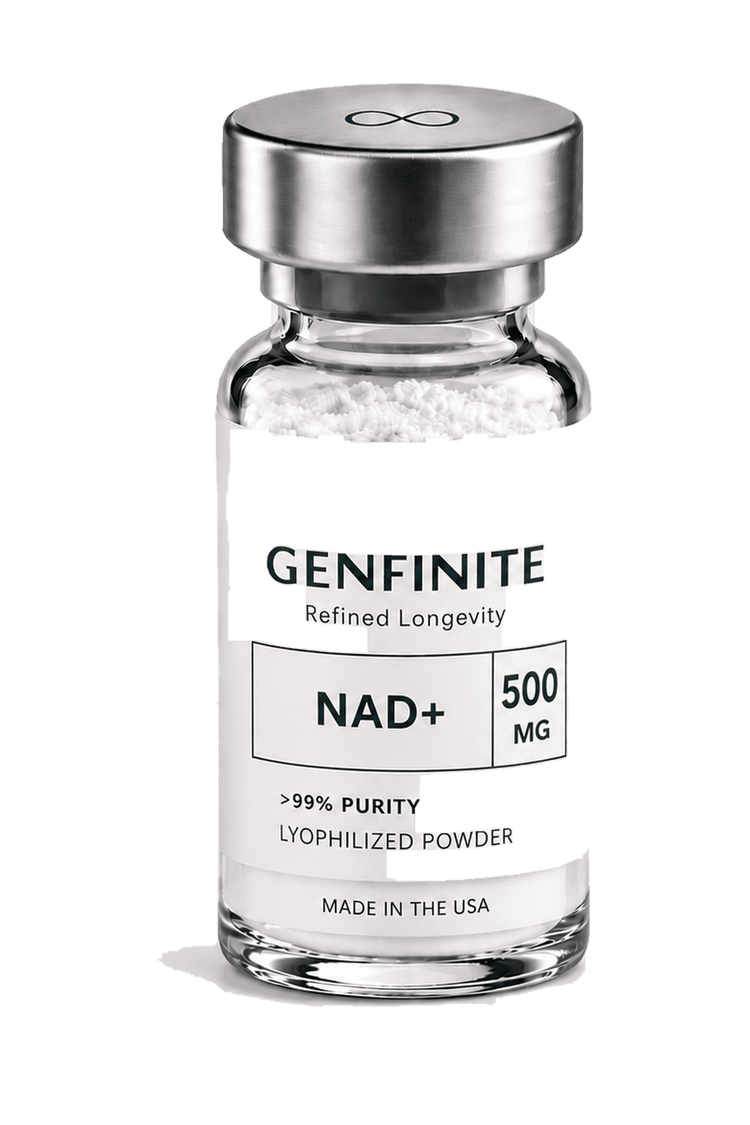
NAD+
Nicotinamide Adenine Dinucleotide
Endogenous dinucleotide coenzyme present in every living cell
$70
Per vial · Research use only · COA available
Compound Profile
| Appearance | Lyophilized white to off-white powder |
| Molecular Weight | 663.43 g/mol |
| Amino Acids | N/A — dinucleotide coenzyme, not a peptide |
| Dosage | 500 mg |
| Volume | 5 mL |
| Solubility | Sterile water |
| Purity | ≥98% (HPLC-UV-MS verified) |
| Storage | −20°C long-term · 4°C short-term · Protect from light |
COA, sterility, endotoxin, and heavy metal test results available upon request.
For Research Use Only. This product is not for human consumption, clinical use, or veterinary use. Must be 21+ to purchase. Not evaluated or approved by the FDA for any therapeutic use. Introduction into humans or animals is strictly prohibited by law.
Overview
About NAD+
NAD+ (nicotinamide adenine dinucleotide) is a coenzyme found in every living cell, central to cellular energy metabolism, mitochondrial function, and DNA repair signaling. Levels of NAD+ are known to decline with age, making it a heavily studied compound in cellular-aging and metabolic research.
Mechanism of Action
How It Works
NAD+ serves as an essential cofactor for glycolysis, the citric acid cycle, and oxidative phosphorylation, shuttling electrons to drive mitochondrial ATP production. It is also the required substrate for sirtuin enzymes implicated in longevity signaling and PARP enzymes involved in DNA damage repair, linking cellular energy status directly to genomic maintenance pathways.
Scientific Literature
Research Highlights
Essential cofactor in glycolysis, the citric acid cycle, and oxidative phosphorylation
Required substrate for sirtuin enzyme activity — studied extensively in cellular-aging research
Required substrate for PARP enzymes involved in DNA damage repair signaling
NAD+ decline studied as a hallmark of cellular aging across multiple model systems
Mitochondrial function and biogenesis support studied in metabolic research models
Studied in research contexts involving neuroprotection and cellular stress resistance
Central node connecting cellular energy metabolism to genomic stability research
Research Disclaimer: All research highlights are derived from published preclinical, in vitro, and animal studies. Results observed in laboratory models may not translate to human outcomes. Genfinite makes no claims regarding therapeutic efficacy. All products are sold strictly for scientific research purposes only.
Handling
Storage & Reconstitution
Dry Storage
Store lyophilized powder at −20°C, away from light and moisture. Do not open until ready to use. Shelf life is significantly extended by proper dry storage.
Reconstitution
Reconstitute using Sterile water. Add solvent slowly to the side of the vial and allow to dissolve gently. Do not shake vigorously.
Post-Reconstitution
Store reconstituted solution refrigerated at 4°C. Use within your laboratory's established timeframe. Do not refreeze after reconstitution.