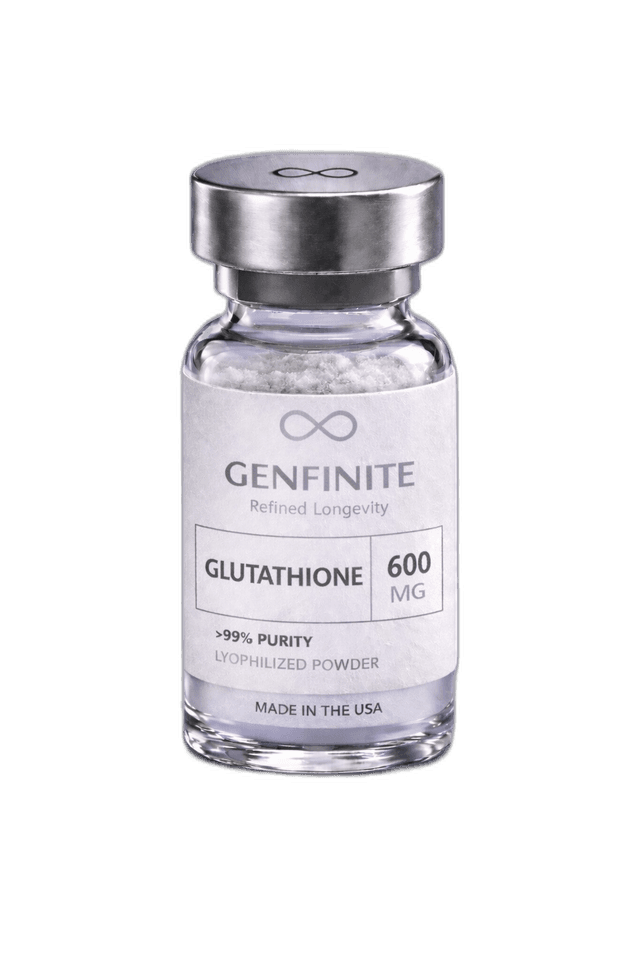
Glutathione (GSH) is a tripeptide composed of glutamate, cysteine, and glycine. It is the most abundant low-molecular-weight thiol compound in mammalian cells, present at concentrations of 1–10 mM in most tissues, and functions as the central hub of the cellular redox defense network. Unlike most antioxidants, glutathione can regenerate itself enzymatically — a property that makes it uniquely effective as a continuous cellular protectant.
Synthesis and Regulation
Glutathione is synthesized in two ATP-dependent steps. First, glutamate-cysteine ligase (GCL) catalyzes the formation of gamma-glutamylcysteine from glutamate and cysteine — the rate-limiting step in GSH biosynthesis. Second, glutathione synthetase adds glycine to complete the tripeptide. Meister and Anderson (1983) established the foundational biochemistry of this pathway and identified cysteine availability as the primary limiting factor in GSH synthesis.
Intracellular GSH levels are tightly regulated through feedback inhibition of GCL by GSH itself. When cellular demand is high — during oxidative stress, illness, or intense metabolic activity — this feedback is relieved and synthesis accelerates. The system is adaptive but has capacity limits.
Why Glutathione Declines
GSH levels decline measurably with age. Sekhar et al. (2011) demonstrated that older adults (aged 61–75) had significantly lower GSH concentrations in red blood cells compared to younger controls (aged 21–45), correlating with increased oxidative stress markers. The decline was attributed to reduced synthesis rates rather than increased degradation.
Beyond aging, glutathione depletion is associated with chronic disease states, environmental toxin exposure, alcohol consumption, acetaminophen toxicity, and persistent psychological stress. In each case, increased demand for GSH as a detoxification cofactor — via glutathione S-transferase conjugation — outpaces synthesis capacity.
HIV infection, sepsis, and various cancers have been associated with dramatically reduced GSH levels in affected tissues, leading researchers to examine whether GSH depletion contributes to disease progression rather than merely resulting from it.
Mechanisms of Antioxidant Activity
Glutathione functions as an antioxidant through multiple parallel mechanisms. In its reduced form (GSH), it directly neutralizes reactive oxygen species (ROS) and reactive nitrogen species (RNS) by donating a hydrogen atom from its cysteine thiol group. Two GSH molecules oxidize to form glutathione disulfide (GSSG), which is then reduced back to GSH by glutathione reductase using NADPH as a cofactor.
GSH also serves as an essential cofactor for glutathione peroxidases (GPx), a family of selenocysteine-containing enzymes that catalyze the reduction of hydrogen peroxide and lipid peroxides — protecting membrane phospholipids and DNA from oxidative damage. GPx4 in particular has been identified as the primary defense against lipid peroxidation and a critical regulator of ferroptosis, a form of oxidative cell death.
Detoxification and Liver Function
The conjugation of glutathione to electrophilic toxins by glutathione S-transferase (GST) enzymes is a primary detoxification pathway. This reaction renders numerous environmental pollutants, drug metabolites, and endogenous reactive compounds water-soluble and suitable for excretion via bile or urine.
The liver maintains the highest GSH concentration of any organ — reflecting its central role in metabolic detoxification. Acetaminophen toxicity, for example, occurs when hepatic GSH stores are overwhelmed by the reactive metabolite NAPQI, leading to covalent protein binding and hepatocellular necrosis. N-acetylcysteine (NAC), the standard treatment for acetaminophen overdose, functions by replenishing GSH precursor availability.
Immune Function and Inflammation
Glutathione plays a direct role in immune cell function. T-lymphocyte proliferation, natural killer cell activity, and cytokine production are all dependent on adequate intracellular GSH levels. Hamilos et al. (1989) demonstrated that GSH depletion in lymphocytes impairs antigen-driven proliferation, while GSH supplementation restores it.
At the inflammatory signaling level, GSH modulates NF-κB activity — a master regulator of inflammatory gene expression. Oxidative conditions that deplete GSH tend to promote NF-κB activation, creating a bidirectional relationship between redox status and inflammatory signaling.
Research Disclaimer: This article is intended for educational and research purposes only. All findings referenced are from published preclinical, in vitro, or animal studies. Results observed in laboratory models may not translate to human outcomes. Nothing in this article constitutes medical advice. Genfinite products are sold strictly for scientific research use only and are not intended for human consumption.
References
- 1.Meister A, Anderson ME. Glutathione. Annual Review of Biochemistry. 1983. DOI: 10.1146/annurev.bi.52.070183.003535 PubMed: 6137189
- 2.Sekhar RV, Patel SG, Guthikonda AP, et al. Deficient synthesis of glutathione underlies oxidative stress in aging and can be corrected by dietary cysteine and glycine supplementation. American Journal of Clinical Nutrition. 2011. DOI: 10.3945/ajcn.110.003483 PubMed: 21795440
- 3.Hamilos DL, Wedner HJ. The role of glutathione in lymphocyte activation. Journal of Immunology. 1985. PubMed: 3925808
- 4.Lu SC. Glutathione synthesis. Biochimica et Biophysica Acta. 2013. DOI: 10.1016/j.bbagen.2012.09.008 PubMed: 23036594
- 5.Dixon SJ, Stockwell BR. The role of iron and reactive oxygen species in cell death. Nature Chemical Biology. 2014. DOI: 10.1038/nchembio.1416 PubMed: 24346035